Monday, 19 February 2018

Evaluation Question 3

What have you learned from your audience feedback?
Early on, we identified our target audience as teenagers and young adults who are fans of art rock and things that are surreal. James created a questionnaire which I gave out to people to fill it in. However this proved to be a flawed concept as the questions didn’t help us much in understanding what they would want to see in our music video.
To make up for this, we organised a focus group made up of the target audience we were hoping to reach. This was us showing them our research into the song and our planning for the video. One responded positively to the storyboard as he said that they would make for some visually interesting and memorable scenes. However another did say that the storyboard could be improved on which I later did by creating a new one.
After we filmed and edited our music video, we brought back some of the members of the first focus group to give us their opinions on the video. Based off this we learnt that they liked the atmosphere and the ambiguous narrative. However, some criticism included; the mirror scene not looking right (because of the visible greenscreen outline), one scene going on for too long resulting in the video seeming somewhat awkward and the music sounded terrible. The latter was a result of James recording the song off YouTube with the internal speakers on the computer.
We fixed these problems as best as we could (we were not able to re-film the greenscreen scene) and showed the final product to the focus group which they liked.
In one of our lessons we went around the class watching each other’s music videos and give our opinions on them. Based on the feedback I received they liked; the narrative, the mirror and cupboard scenes, the open-ended ending while thinking that there was a lack of variety in the shots but by that time it was too late to change anything.

Method: Prezi. I had never used this before but I was able to adapt quickly. I copied and pasted the answer into the sections and added images to the relevant parts.

Friday, 9 February 2018

Evaluation Question 4

How did you use media technologies in the construction and research, planning and evaluation stages?
Throughout the entire process we used Blogger to keep up with the work we were doing whether it was bringing together ideas for the video or presenting them at the end.
For research, I used the YouTube to watch videos in order to take inspiration from them and observe the standard codes and conventions and Wikipedia to learn about different genres to see what would fit ours as well as record companies.
During the planning stage, I used Microsoft Word to create a pseudo-storyboard. It was the lyrics with information of what we were going to put there. I used Photoshop to create the logo for our band which was the Roman eagle with the name.
While we were filming we used the cameras on our phones to film.
When I made my digi-pack, I used In Design and Photoshop. I used the latter to bring in and edit images for the digi-pack. The former to put together the whole CD. While I was not the one who did the editing, I did a small practice of it in Sony Vegas to see where some bits would go which James looked at and the opening of his would be similar.
I used Wix in order to design a website for our band. I will admit that I am unskilled when it comes to something like this so I just made some simple pages with images of our CD and logo.
Finally when evaluating our music video, I have used Prezi in order to answer one of the questions as well as currently using green screen to answer this one.

Method: Greenscreen. James and I went down to the greenscreen room and recorded each others answers. We both had the computer on in the back with the answer in the largest size possible so we could see it. We both broke up the answer into sections which resulted in mine being finished in 10 minutes. I put it into Sony Vegas where I changed the colour of the greenscreen to black and added the images of what I was talking about.


Evaluation Questions Introduction


In what ways does your media product use, develop or challenge forms and conventions of real media products?
Our media product conforms to Roland Barthes’ Enigma Code theory until the end as the meaning is not fully explained but unlike other examples of this theory, the loose ends are not tied up and the true meaning of the video is left up to the viewers’ own connotations.
Intentional low quality in some areas to add to the surreal theme. This goes against standard codes and conventions as ‘normal’ music videos usually have good quality.


How effective is the combination of your main product and ancillary tasks?
Along with our music video, we developed two digi-packs, a poster and a website. I designed one of the digi-packs and the website.
The cover for my digi-pack was something that I designed to also be a poster. I put an image of James and me from last year and added multiple filters to it resulting in the very unique effect.
The rest of the outside features our logo as well as a picture from last year with awards that this album apparently won. The inside has two images from the music video which I considered to be the most visually interesting. One of them also features a list of songs that James put together with only two being my choices.
Finally I decided to go a step further and attempt to design a website to promote our fictional band. I decided to use Wix since it was free and seemed straightforward. I picked a pre-existing template and began. However, I am not incredibly skilled when it comes to things like this, especially since this was the first time I used it. I mainly kept the aesthetic and added images of our band and CD as well as some information. I later edited it to look a bit better.


What have you learned from your audience feedback?
Early on, we identified our target audience as teenagers and young adults who are fans of art rock and things that are surreal. James created a questionnaire which I gave out to people to fill it in. However this proved to be a flawed concept as the questions didn’t help us much in understanding what they would want to see in our music video.
To make up for this, we organised a focus group made up of the target audience we were hoping to reach. This was us showing them our research into the song and our planning for the video. One responded positively to the storyboard as he said that they would make for some visually interesting and memorable scenes. However another did say that the storyboard could be improved on which I later did by creating a new one.
After we filmed and edited our music video, we brought back some of the members of the first focus group to give us their opinions on the video. Based off this we learnt that they liked the atmosphere and the ambiguous narrative. However, some criticism included; the mirror scene not looking right (because of the visible greenscreen outline), one scene going on for too long resulting in the video seeming somewhat awkward and the music sounded terrible. The latter was a result of James recording the song off YouTube with the internal speakers on the computer.
We fixed these problems as best as we could (we were not able to re-film the greenscreen scene) and showed the final product to the focus group which they liked.
In one of our lessons we went around the class watching each other’s music videos and give our opinions on them. Based on the feedback I received they liked; the narrative, the mirror and cupboard scenes, the open-ended ending while thinking that there was a lack of variety in the shots but by that time it was too late to change anything.


How did you use media technologies in the construction and research, planning and evaluation stages?
Throughout the entire process we used Blogger to keep up with the work we were doing whether it was bringing together ideas for the video or presenting them at the end.
For research, I used the YouTube to watch videos in order to take inspiration from them and observe the standard codes and conventions and Wikipedia to learn about different genres to see what would fit ours as well as record companies.
During the planning stage, I used Microsoft Word to create a pseudo-storyboard. It was the lyrics with information of what we were going to put there. I used Photoshop to create the logo for our band which was the Roman eagle with the name.
While we were filming we used the cameras on our phones to film.
When I made my digi-pack, I used In Design and Photoshop. I used the latter to bring in and edit images for the digi-pack. The former to put together the whole CD. While I was not the one who did the editing, I did a small practice of it in Sony Vegas to see where some bits would go which James looked at and the opening of his would be similar.
I used Wix in order to design a website for our band. I will admit that I am unskilled when it comes to something like this so I just made some simple pages with images of our CD and logo.
Finally when evaluating our music video, I have used Prezi in order to answer one of the questions as well as currently using green screen to answer this one.

Monday, 18 December 2017

Group Blog

Link: https://group-b-david-james-g324.blogspot.co.uk/

Music Video Link: https://www.youtube.com/watch?v=kiVvAXzqA3c&feature=youtu.be


During this year, I have been working with James Donovan to create a music video for the David Bowie song; The Man Who Sold The World.
The group blog shows the process of the planning and filming for the video.
We shared responsibilities for the video, but I focused more on the group blog while James paid more attention to editing. We both worked on the storyboard and filming.


Research and Planning:
We started off with two options for our music video, the other one being Nine Inch Nails' Hurt. I preferred the David Bowie song so that is what we went with. I had several ideas for the video and wanted it to be quite a surreal experience. I wanted to take inspiration from songs such as Ashes to Ashes.
Image result for david bowie music video

For the storyboard, it was basic just showing shots that we wanted to take.


Later on I would create a new storyboard that worked better as it showed the video in order.


I also took it upon myself to create a name for the band, while James created the album name. I didn't want something simple so I chose names that referenced history and mythology which led to the name being Nero Redivivus. I was also the one who created the logo through Photoshop.


Filming:
During this time, I took multiple shots on my own including; time-lapses of the sky and a crowd and a lip-sync. I also filmed a close-up for the VHS scene.

Thursday 16th November
Location: Yewtree Cemetery
Shots Taken: Depth of field, pan-shot and hand on tombstone.
Weather: It was sunny but still had a lot of wind blowing.
For these bits, I was the only person on the camera so I did the work for lip-syncing and setting up the music for the shots.

Saturday 25th November
Shots Taken: Mirror shots with greenscreen. Medium shot with lighting under face. Shot of water blowing with the wind.
Weather: Frequent rain. Bright. This didn't effect filming as we were inside.


Monday 4th December 2017: Greenscreen shots. Close-up of eye.

Saturday 9th December: Cemetery, re-shot depth of field, pan shot with lip-sync. James' house, re-shot the mirror scene and filmed shot in the cupboard. Town, shots of crowds and river.
The poor weather did affect some continuity but we re-shot the scenes were it would have been affected.


Sunday 10th December: Close up of putting a video into a video player. This is something that I did alone.


Editing and Extra:


Although James did the proper editing, I started off with an edit to see the order that the shots would go in which would influence the actual video.

I primarily focused on extra work during this period of time. This included creating a magazine advert and a digi-pack for our group.


I attempted to create a different magazine advert for the concert however this ended up looking terrible. I wanted to add in an image of the two of us. I had to put this into Photoshop to remove the background but this ended up looking poor.


I used an image that was taken from last year and used Photoshop to create two adverts; one for the CD and the other as promotion for a concert.

For the digi-pack, I used InDesign and got a template in order to design it. I used images from the music video, the logo, the magazine advert and images online to create it.


Link to Wix: 


One of the things that needed to be created for promotional purposes was a website. I did this task by using Wix to design a website to promote the band.
The biggest problem was the fact that this was too complicated for me to create a good site. However I made three pages for basic presentation.
Overall, the greatest issue with making the website was that the designer existed to create a legitimate website for real music, not a fictional band like what we were doing. This mean that there was a lot about the base design that couldn't be changed.


Monday, 27 November 2017

Carol Vernallis Analysis of Music Video

Carol Vernallis had a theory that there are four key concepts to a music video; narrative, editing, camera movement/framing and diegesis.
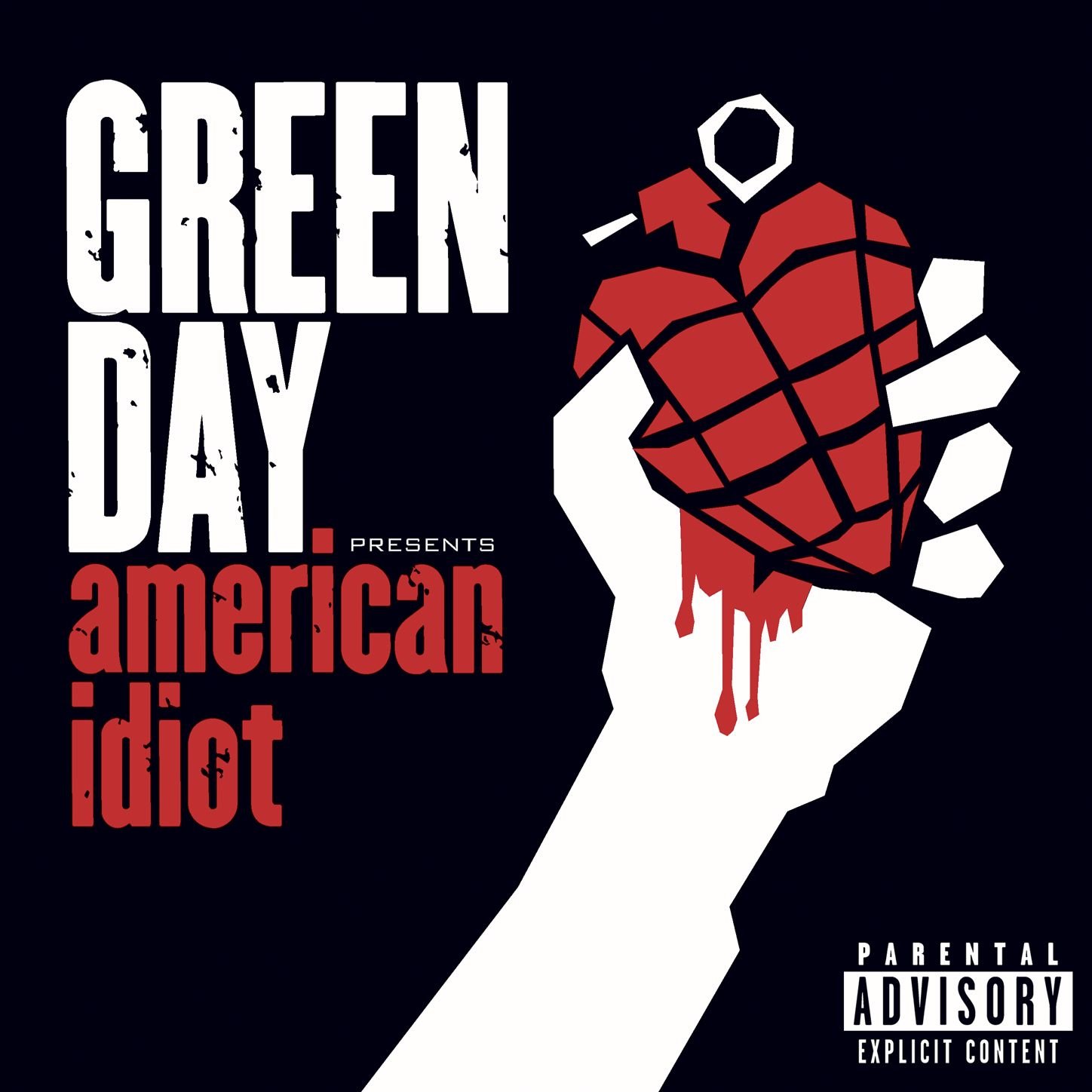
I have decided to apply these concepts to the music video for Green Day's "Jesus of Suburbia"

Image result for american idiot

Narrative: The narrative of the video is that of the titular character becoming disillusioned with his life, starts rebelling and eventually leaves his town.

Editing: The video makes multiple uses of jump cuts and fast editing. On several occasions, the lyrics and music stop entirely for regular conversations between people before going back to the song.This makes the video very intense which matches with the lyrics.

Camera Movement: The video uses close-ups many times as well as medium shot, long shots and crab shots. There are also examples of panning in the video to show different people.

Diegesis: The diegesis for the music video is revealed slowly in the video as it starts out as a bunch of seemingly random scenes but hold a meaning as they are telling a story. It is also linked to the album it came from "American Idiot" as all songs from it are pieces of the story it is telling.

Intertextuality

Definition-The term Intertextuality refers to the process of creating references to any kind of media text via another media text. In other words Intertextuality essentially means for a type of media(film,television,music etc) to pay homage to another media text.


An example of intertexuality in a music video is the song "You Know Me" by Robbie Williams.
While it starts off normally, it takes a turn when the man is pulled through a mirror into a world similar to that of Alice in Wonderland with Robbie dressed up as the White Rabbit. The intertexualtity here is the link between the video and the story.
Another example of intertexuality in the video is at the end where the lion in the MGM logo is replace by Robbie dressed as the rabbit.


Image result for robbie williams you know me

Tuesday, 21 November 2017

Album Covers Analysis

Image result for sabaton covers

Cover for 'The Last Stand' by Sabaton. Released in 2016.

This cover matches standard codes and conventions for album/CD covers as it features the name of the band, the name of the album and an image.

Sabaton are a power metal band (a sub-genre of heavy metal combining characteristics of traditional metal with speed metal, often within symphonic context). The cover doesn't represent this well as one wouldn't understand the genre from the cover alone.

The cover is memorable as it features images of soldiers from throughout history which is unusual for a album cover.
The image on the cover matches the album as it is called 'The Last Stand' and all songs on it focus on historical last stands involving the people on the cover.

Peak performance in the charts:
Sweden; 1
Austria; 2
Finland; 1
Germany; 2
Norway; 11
Switzerland; 1
Poland; 2
UK; 17
US; 63

Songs of Album: 
Sparta; Battle of Thermopylae

Last Dying Breath; Dragutin Gavrilović

Blood of Bannockburn; Battle of Bannockburn

Diary of an Unknown Soldier; Meuse-Argonne Offensive

The Lost Battalion; Lost Battalion (World War I)

Rorke's Drift; Battle of Rorke's Drift

The Last Stand; Stand of the Swiss Guard

Hill 3234; Battle for Hill 3234

Shiroyama; Battle of Shiroyama

Winged Hussars; Polish hussars/Battle of Vienna

The Last Battle; Battle for Castle Itter

Camouflage (Stan Ridgway Cover) (Bonus Track); Vietnam War


All Guns Blazing (Judas Priest Cover) (Bonus Track)


Image result for sabaton covers

Cover for 'Heroes' by Sabaton. Released in 2014.

Similar to their album above, 'Heroes' features images of soldiers to match the name of the album. It also works because the image is eye-catching to someone browsing through album covers.
The images on both covers are not real people. It is obviously fake and comes across as an image from a video game.

Peak performance in the charts:
Sweden; 1. Gold
Austria; 11
Finland; 2. Gold
Germany; 3
Norway; 13
Switzerland; 7
Poland; 6
UK; 59
US; 99

Songs of Album: 
Night Witches; The all female Soviet 588th Night Bomber Regiment called "Night Witches".

No Bullets Fly; The Charlie Brown and Franz Stigler incident, in which German pilot Stigler accompanied a disabled American bomber back to the English Channel.

Smoking Snakes; Arlindo Lúcio da Silva, Geraldo Baeta da Cruz and Geraldo Rodrigues de Souza – 3 Brazilian Expeditionary Force soldiers who became separated from their unit and fought a large contingent of Germans in Italy on 14 April 1944. Refusing surrender, they fought to their deaths and were buried by the Germans, who placed a cross over their graves with the inscription 'Drei brasilianische Helden' (Three Brazilian Heroes).

Inmate 4859; Witold Pilecki, soldier of Polish Armia Krajowa and leader of resistance movement in the Birkenau Auschwitz concentration camp, where he was interned voluntarily with inmate number 4859. Produced the Witold's Report.

To Hell and Back; Audie Murphy, one of the most decorated American veterans of World War II. Specifically his post war battle with; and victory over PTSD. Based off his own poem 'The Crosses Grow on Anzio' from his book 'To Hell and Back'

The Ballad of Bull; Corporal Leslie "Bull" Allen, an Australian Army soldier awarded the US Silver Star for rescuing 12 wounded American soldiers during the Papua New Guinea campaign of World War II.

Resist and Bite; Chasseurs Ardennais, an infantry formation of the Belgian Armed Forces that fought in the Battle of Belgium in World War II

Soldier of 3 Armies; Lauri Törni known as Larry Thorne, soldier of the Finnish Army, the German Waffen-SS, and the United States Army Green Berets in Vietnam

Far from the Fame; Hero of Czechoslovakia – Air Marshal Karel Janoušek, founder of Czechoslovakian forces in Royal Air Force. Later imprisoned by communist regime in Czechoslovakia.


Hearts of Iron; The German forces of the 12th and 9th Armies, who, facing defeat at the hands of the Soviets, created a corridor across the Elbe to protect fleeing refugees and soldiers to escape and surrender to the West.


Image result for king crimson album covers

Cover for 'In the Court of the Crimson King' by King Crimson. Released in 1969.

This is a very unusual album cover, as it doesn't feature the album's name or the band who made it. A person wouldn't know what this was just based on the image alone. This is what makes it appealing to the eye.

King Crimson is a progressive rock band and is known for the strange and dream-like songs that they produce so, in a way, this cover fits the band well.

Peak performance in the charts:
UK; 5. Gold
Canada; 27. Platinum
US; 28. Gold

Songs on Album:
21st Century Schizoid Man
        Mirrors

I Talk to the Wind

Epitaph
    March for No Reason
    Tomorrow and Tomorrow

Moonchild
   The Dream
   The Illusion

The Court of the Crimson King
  The Return of the Fire Witch

  The Dance of the Puppets


Cover for 'In the Wake of Poseidon' by King Crimson. Released in 1970.

Similar to their previous album cover 'In the Wake of Poseidon' features neither the name of the band or album, leaving only the image to draw in the audience.

The two albums are also similar in the naming of the albums. Both names evoke feelings of fantasy, matching the bizarre images.

Peak performance in the charts:
UK; 4
Canada; 28
US; 31

Songs on Album:
Peace – A Beginning

Pictures of a City
    including 42nd at Treadmill

Cadence and Cascade

In the Wake of Poseidon
    including Libra's Theme

Peace – A Theme

Cat Food

The Devil's Triangle
          I. "Merday Morn
          II. "Hand of Sceiron
          III. "Garden of Worm


Peace – An End